CINTSA– In the quiet farms of Cintsa, a local man has turned the challenge of unemployment into a thriving agricultural enterprise proving that with determination and a clear vision, even unused land can become a beacon of opportunity. Bongani Tsewu(41), who grew up in a farming village, drew inspiration from his rural roots to start his own farming business, Kuyasa Farm Enterprise, in 2018.
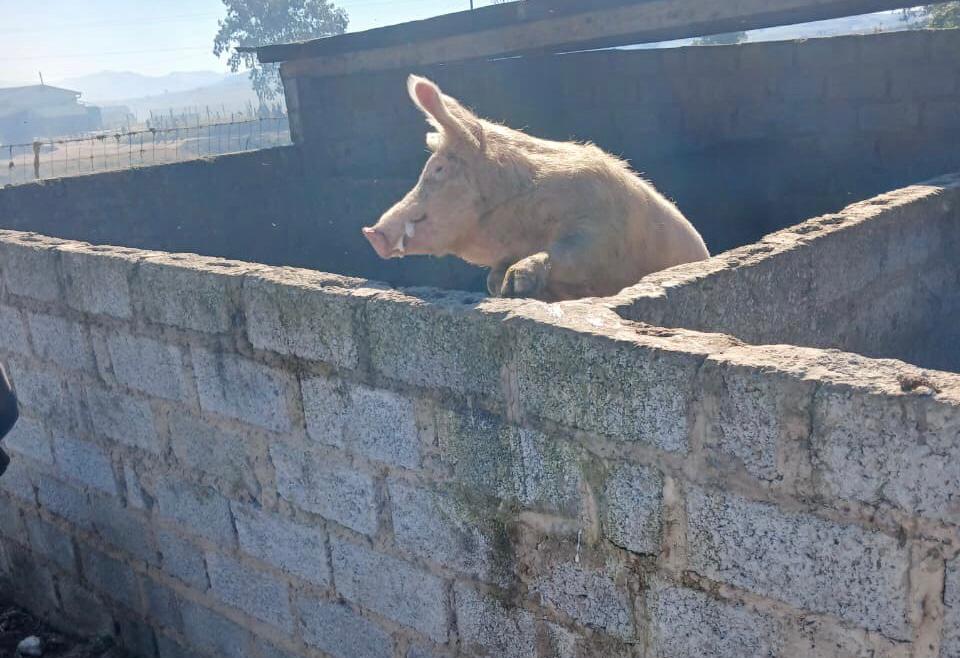
Although he only registered the company officially in 2022, Tsewu had already begun laying the groundwork for a piggery and broiler farm on unused land in Reeston, East London. “I didn’t study agriculture,” said Tsewu. “But I grew up in a village where farming was part of life. I knew what needed to be done, but I also didn’t rely only on that. I decided to learn more.”

Tsewu attended Farmers’ Day events hosted by Epol and the South African Poultry Farmers Association. He went further to complete a three-week training course under VEGADO and the Eastern Cape Poultry Association, where he earned an NQF Level 4 certificate. He also credits Phumza Sifingo, a successful piggery farmer, as one of his mentors.
After losing his job at Blue Lagoon Hotel, Tsewu faced financial hardship, including struggling to meet obligations with SARS. But even that did not stop him. He continued running his piggery with the help of his mother and brother back home, while managing the broiler business in Reeston.
“It may look easy to start a farming business, but it’s not, the biggest challenge is feed. You must always have feed available without it, you can’t sustain the animals,” he shared.
“Farming is not a quick way to get rich. If you’re not passionate about it, don’t start you’ll just waste your time, money and energy,” Tsewu.
His message to the youth and unemployed is clear, “Don’t wait to be employed. Create your own opportunities. Think about the kind of business you want to build and commit to making it succeed.”
Tsewu’s story is one of resilience, innovation, and a deep connection to the land a powerful reminder of the untapped potential that lies in our rural communities.
Photograph: Supplied