

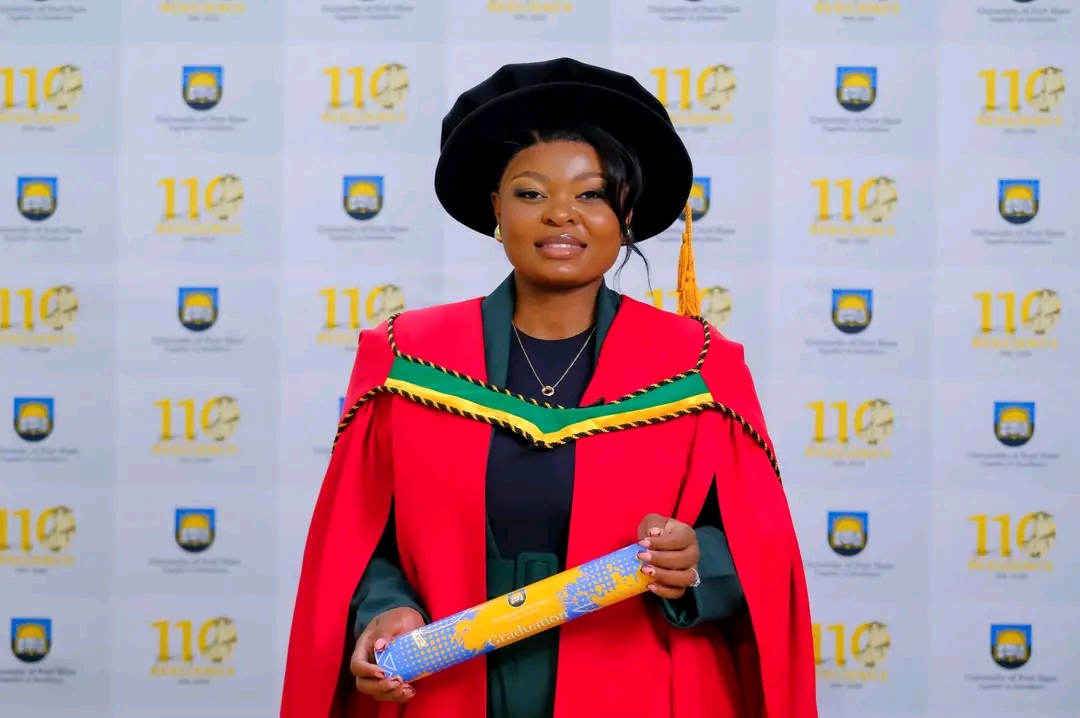
PEDDIE- Years of hard work, determination and a passion for rural development paid off for a young Peddie academic this week when she graduated with a doctorate from the University of Fort Hare with research focused on the economic potential of beekeeping in rural communities.
At just 27, Peddie-born Dr Owetu Zamisa emerged as the university’s youngest PhD graduate during its 2026 autumn graduation ceremonies after completing a Doctor of Philosophy in Agricultural Economics.

Her doctoral study investigated the income implications of beekeeping and the factors influencing value addition and commercialisation among small-scale beekeepers in the Eastern Cape.
Zamisa said beekeeping remained an overlooked sector despite its strong potential to create livelihoods in rural communities where job opportunities are limited.
“Beekeeping is a sector with great potential, especially in areas where opportunities are limited, but it is often overlooked,” she said.
Her research involved 300 small-scale beekeepers across rural Eastern Cape communities and found that education, cooperative membership, access to market information and farming inputs are among the key drivers of successful value addition and commercialisation.

Furthmore, the study further found that participation in beekeeping activities significantly improves household income, strengthening the case for apiculture as a rural economic development strategy.
Zamisa used advanced econometric models, including the Cragg Double Hurdle model, Multivariate Probit and Endogenous Switching Regression to analyse participation in beekeeping value chains and their impact on household income.
Her academic journey at Fort Hare spans 10 years. She enrolled in 2016 for a BSc in Agricultural Economics before progressing to honours, master’s and doctoral studies. She now works as a lecturer in the Faculty of Science and Agriculture.
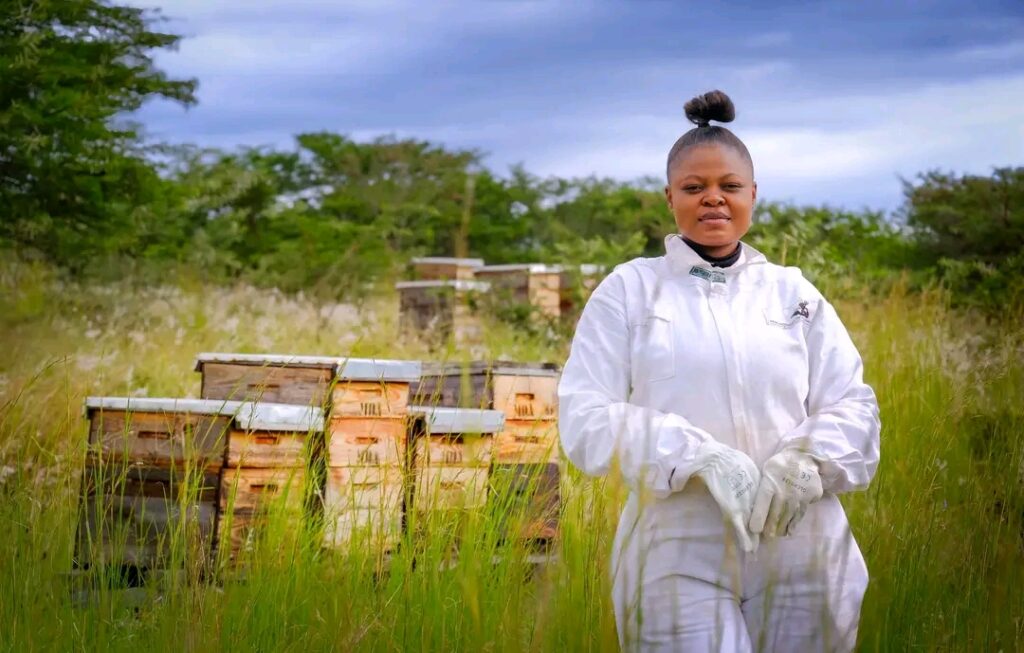
She emphasised her interest in Agricultural Economics began during her high school years after attending science festivals where university students showcased different fields of study.
In addition fieldwork for her research took her into remote rural communities where beekeepers were often difficult to reach.“I had to travel to remote areas to find participants. Beekeepers are scattered, and in some communities there are fears and beliefs around bees. Some associate them with ancestral messages,” she said.
One of the beekeepers who participated in the study, Luthango Stamper, said the research helped their cooperative understand how to grow beyond subsistence farming.
“Her work opened our eyes. It showed us that we can become more than small producers we can become a recognised business,” he said.
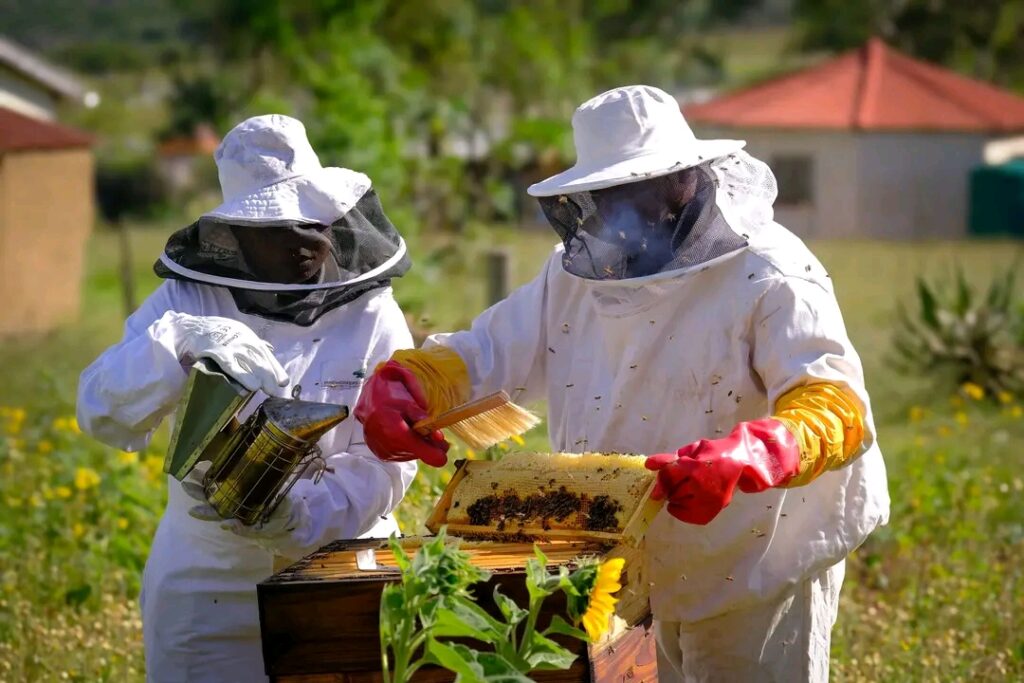
According to Stamper, the cooperative has since improved its branding, packaging and bookkeeping systems to prepare for formal retail markets.
Zamisa credited much of her academic growth to her supervisor, Prof Amon Taruvinga, who guided her from honours level through to her PhD.
Her academic journey was also marked by personal hardship. During her honours year she lost her younger brother to cancer, while weeks before graduation she also lost her uncle.
“These experiences were painful. But they also became part of my motivation to keep going and finish what I started,” she said.
Now working in academia, Zamisa said she hopes to mentor young researchers and inspire students from rural backgrounds to pursue higher education.
Her mother, Nompumelelo Zamisa, described her daughter as “the pride of the family”.“She is the first to graduate and now she is an Academic Doctor. I witnessed her struggles and now I am witnessing her successes,” she said.
Reflecting on her journey, Zamisa described Fort Hare as her “second home”.“That’s where I discovered my purpose, where I developed academically and where I became who I am today,” she said.
Source: UFH/Arentha Linden
Photographs: UFH/Supplied













Leave a Reply