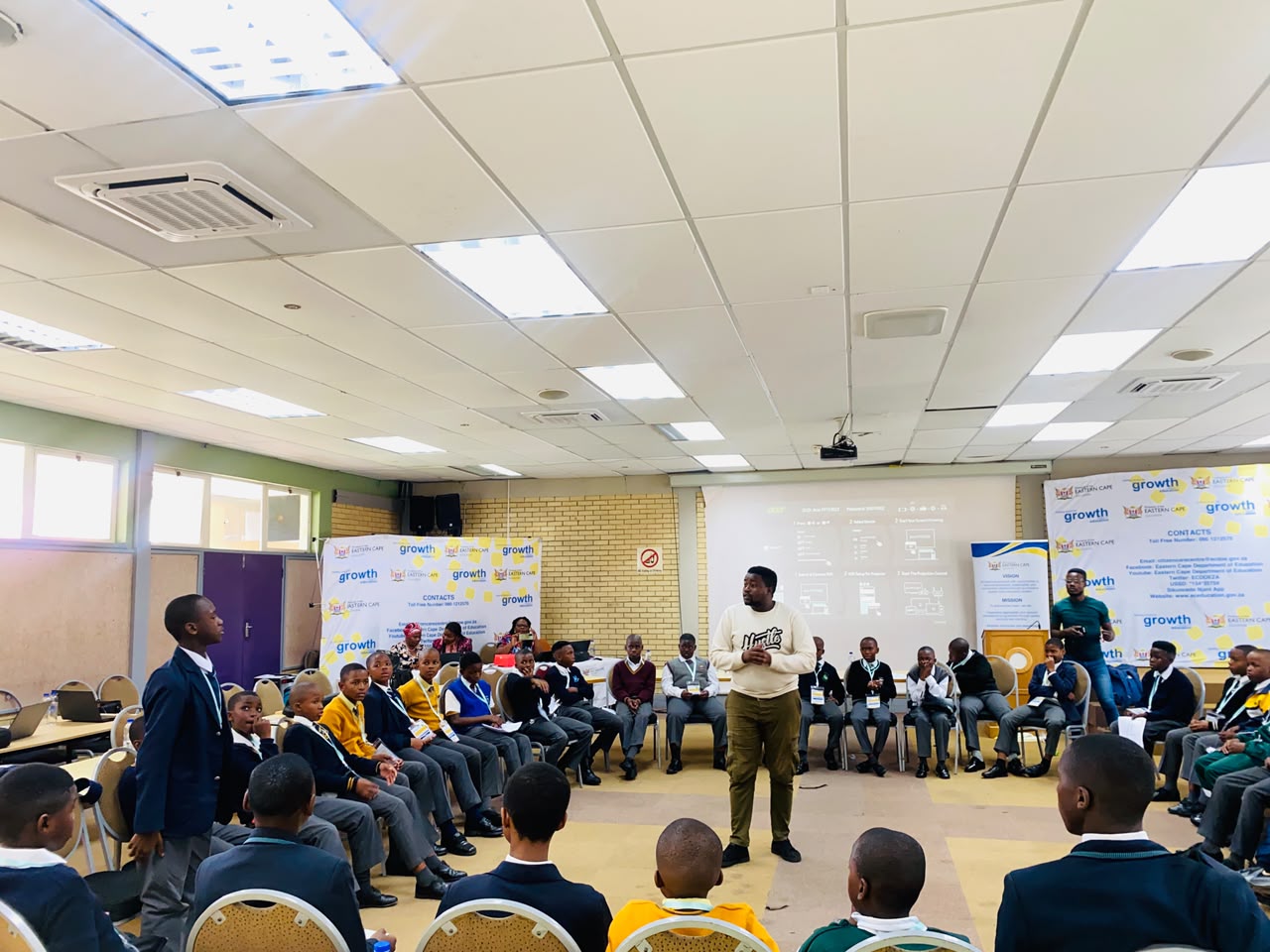
EAST LONDON– The Eastern Cape Department of Education(EC DoE) has concluded the second and final day of its two-day Inclusive Education Indaba held at the Regent Hotel in East London on 12 November 2025. The gathering marked a decisive step towards reshaping the provincial education system to ensure equitable access and quality learning opportunities for all learners particularly those with special educational needs.
Speaking passionately on learners with barriers to learning and the Three-Stream Model, EC DoE Chief Director for Curriculum Management, Chulekazi Xundu-Bula emphasised that education must extend beyond classrooms to build inclusive societies where every learner can thrive regardless of their background, ability or challenge.

“When we talk about learners with barriers to learning we are talking about emotional, cognitive, social, environmental and systemic barriers, the real obstacles that prevent full participation in learning,” she explained.
Xundu-Bula further added that, “Our duty as educators is to identify these barriers early and provide the right support pathways, including through the Three-Stream Model.”

Director for Inclusive Education at the Department of Basic Education (DBE), Jabulani Ngcobo, said the Indaba provided both a reflection space and a strategy platform to strengthen collaboration across all sectors. He highlighted that education is a social good that must be accessible to all and that teachers, officials, civil society and business each have a vital role in achieving inclusivity.
Ngcobo further stressed the importance of teacher well-being and support as key to sustaining inclusive education.

In addition Eastern Cape Disability Economic Empowerment Trust (EC DEET), Chief Executive Officer Thabiso Petuka noted that true inclusivity means allowing learners to choose between mainstream, full-service and special schools, in line with the White Paper on the Rights of Persons with Disabilities, which promotes integrated learning environments

It was emphasised that no child, whether in primary or secondary school should ever be subjected to abuse within the education system.
A standard mobility procedure must therefore be established to guide the management, identification and handling of child abuse cases in a consistent, transparent and accountable manner.
Photographs: Sandiswa Mgobo