

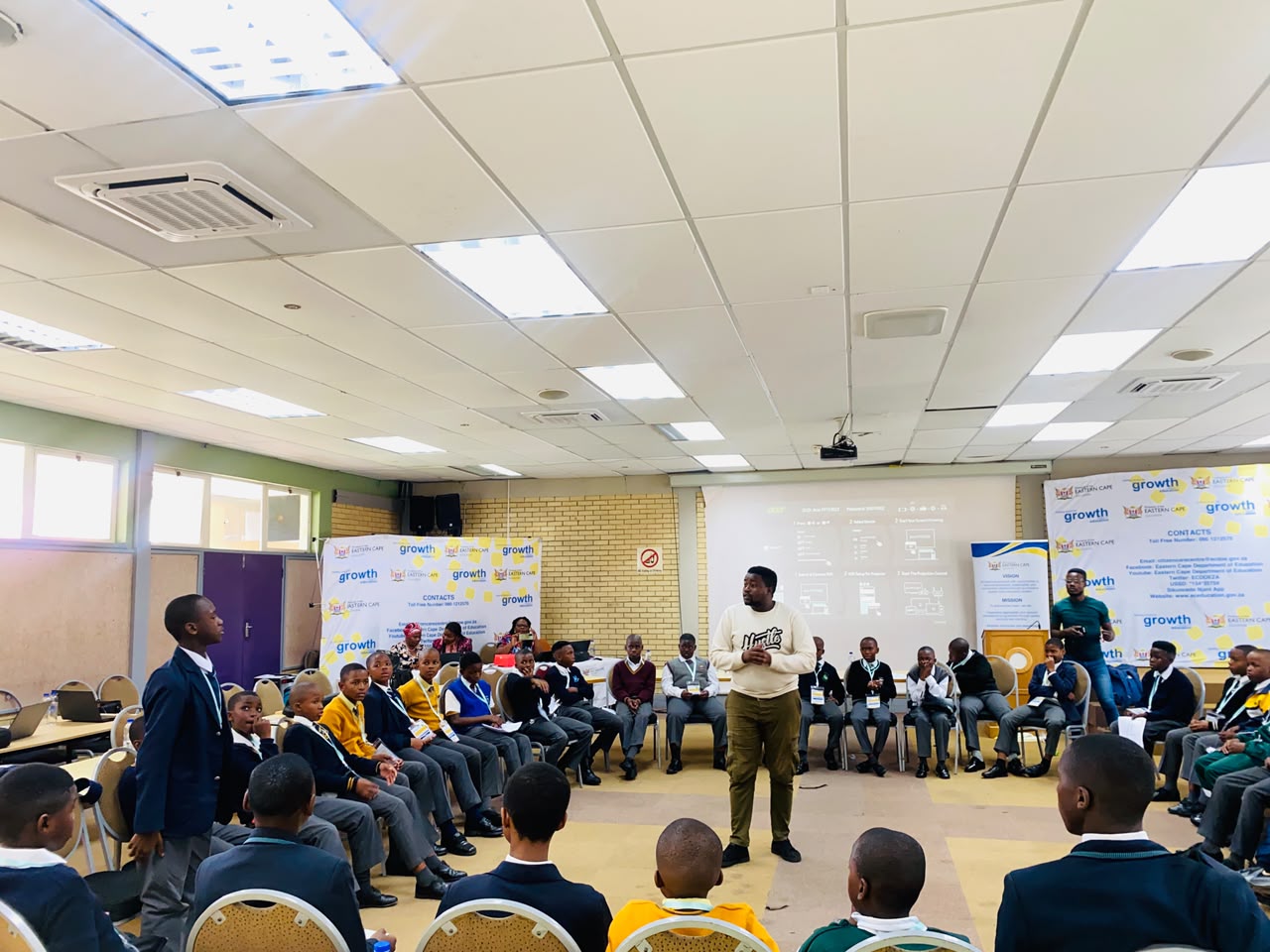
KUGOMPO CITY- The Eastern Cape Department of Education (ECDoE) hosted the Natural Sciences Olympiads and Astro Quiz on 21 September 2026 at the Mandla Makupula Education Leadership Institute (MMELI) in KuGompo City, bringing learners together to develop their interest in Science, demonstrate their knowledge, problem solving skills and promote academic excellence.
The programme featured activities focused on Natural Sciences and astronomy giving learners an opportunity to apply their knowledge and strengthen their understanding of scientific concepts.
Subject Advisor for Natural Sciences and Technology in Buffalo City Metro District, Andiswa Boqwana said the Natural Sciences Olympiads initially targeted Grade 6 learners but have since expanded to include learners from Grade 4.

“The Olympiads are aimed at young learners from rural areas and focus on key areas of Science including Life and Living, Matter and Materials, Energy and Change and Planet Earth and Beyond,” said Boqwana.
She said the programme helps learners develop critical thinking and apply their knowledge while strengthening their understanding of Science.
Boqwana added that, the department had introduced measures to make the Olympiads more accessible to rural learners by providing question papers in their mother tongues.
“This allows learners to write the examinations in a language they are most comfortable with, helping them understand the questions better and demonstrate their knowledge with greater confidence,” she said.

Boqwana further stated that the programme also helps learners develop a stronger understanding of Science and prepares them to make informed subject choices when they reach Grade 10.
In addition, the initiative aimed to encourage young people to consider science related subjects and careers while promoting scientific development in schools.
A retailer for Total Energies in KuGompo and one of the Olympiads sponsors Mpho Nonyane said the company has supported the programme since 2022.
“We have been sponsoring the Olympiads since 2022 because we want to support disadvantaged learners from deep rural areas and help them develop a better understanding of their subjects before they enter high school,” she said.
Nonyane said the Olympiads are open to learners from all 12 districts of the Eastern Cape. However, a specific category for rural schools was introduced after organisers observed that most participants came from urban schools.
“Although the Olympiads are open to learners from all 12 districts, we noticed that most participants came from urban schools. We therefore introduced a category specifically for rural schools, where learners can write the Olympiads in their own mother tongue,” said Nonyane.
A learner from Erising Little Angels English Medium Christian School, Olothando Cuba said participating in the Olympiads had improved his understanding of Science and helped him think about his future career.
“Being here has given me a better understanding of Science. I now have an idea of what I want to become and which subjects I should choose to pursue the career I am interested in,” said Cuba.
While a Grade 4 learner from Didi Primary School in the Alfred Nzo East District, Yolisa Ndlela said the Olympiads had taught her about the importance of protecting the environment.
“Through these Olympiads, I have learned that we must take care of our planet because we cannot live without it. I now understand that we need to remove invasive alien plants to protect our indigenous plants,” said Ndlela.
She emphasised that science is not only about learning from textbooks but also about understanding and caring for the world around us.
“Science is about having fun and bringing joy. It teaches us about taking care of our planet, technology, energy and change, metals and the things around us. It is important for us to have knowledge about our surroundings because we are human beings and we deserve to understand our planet,” she said.

However, the olympiads highlighted the importance of making science accessible to learners, particularly those from rural communities while encouraging them to build scientific knowledge, understand their environment and consider future careers in Science and technology.




Leave a Reply