

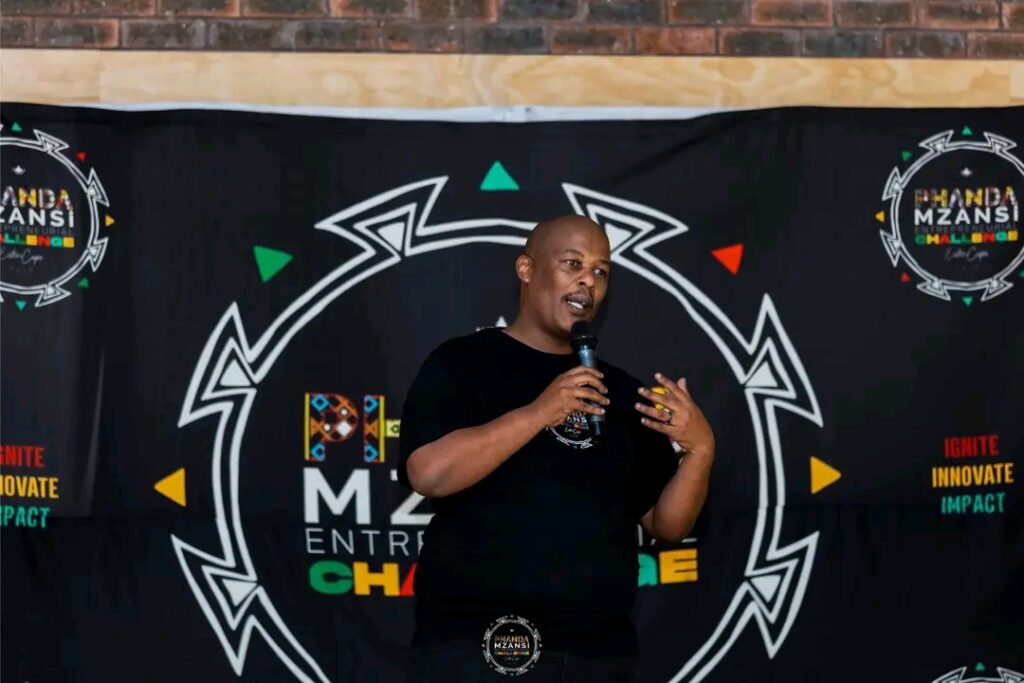
KUGOMPO CITY- Phanda Mzansi has launched its Eastern Cape Entrepreneurial Challenge, committing R200,000 of its own funds to support youth and women entrepreneurs while expanding opportunities for township and rural businesses across the province.
The initiative was officially unveiled during a media briefing Wednesday, 15 July under the theme ‘Building Entrepreneurs, Building South Africa.’
Phanda Mzansi Director Lonwabo Rani said the competition was designed to help entrepreneurs move beyond the start-up phase by providing funding, mentorship and business development support.

“We want to build sustainable businesses, particularly in township and rural communities where entrepreneurs often struggle to access opportunities,” Rani said.
Applications for the challenge have officially opened, with entrepreneurs required to explain why they deserve funding and how the money will help grow their businesses.
The competition offers R100,000 for first place, R50,000 for second place and R30,000 for third place. A further R20,000 has been reserved for informal and unregistered businesses, including street traders and small-scale vendors selling fruit, vegetables, sweets and other goods. The recipient of this prize will be selected through a public vote.
Rani said the decision to establish the competition followed three years of working directly with entrepreneurs across the Eastern Cape.
“The biggest challenge we continue to see is access to finance. Whether it’s starting a business or expanding one, entrepreneurs often have good ideas but lack the capital to move forward,” he said.
“We realised that offering marketing advice and mentorship alone was not enough. We sat down with our partners and decided to invest our own money to help entrepreneurs grow.”
Although Phanda Mzansi remains self-funded, Rani said government still has an important role to play in creating an environment where businesses can succeed.
“Government should make it easier for entrepreneurs to do business by reducing barriers, lowering taxes where possible and providing affordable spaces for businesses to operate,” he said.

“If entrepreneurs rely entirely on government funding, their businesses may struggle because government has many competing priorities. I started my own business 20 years ago without government assistance. Today we are able to use profits from that business to support others. This funding comes directly from Phanda Mzansi.”
The organisation says its support has already made a tangible difference to several businesses, including VW Carpentry Business, owned by qualified carpenter and cabinet maker Viwe Soshuba from Mdantsane.
Soshuba began by training community members in carpentry and cabinet making despite operating without financial backing. Several trainees have since secured employment through the business.
With assistance from Phanda Mzansi in October 2024, Soshuba successfully applied for R240,000 in funding from the Department of Small Business Development.
The funding enabled the purchase of specialised machinery and the establishment of a new factory in Da Gamat. The business is expected to relocate from Mdantsane to the new premises, with operations scheduled to begin on 1 August 2026.
“Their support helped us access funding, buy machinery and establish a factory that will allow us to expand and create more jobs,” Soshuba said.

Looking ahead, Rani said the Eastern Cape Entrepreneurial Challenge would be rolled out across all six district municipalities and the province’s two metropolitan municipalities.
Teams will host outreach events and visit community radio stations to ensure entrepreneurs from remote areas can participate without travelling to major centres.
“We want every entrepreneur in the province to have an opportunity to enter,” Rani said.
“We are calling on media houses, social media influencers and successful businesses to help us spread the word and support this initiative so that we can reach every corner of the Eastern Cape.”
The organisation hopes the challenge will not only provide financial support to emerging businesses but also contribute to job creation and long-term economic growth across the province.
By: Sthabile Sambela
16 July 2026









Leave a Reply