


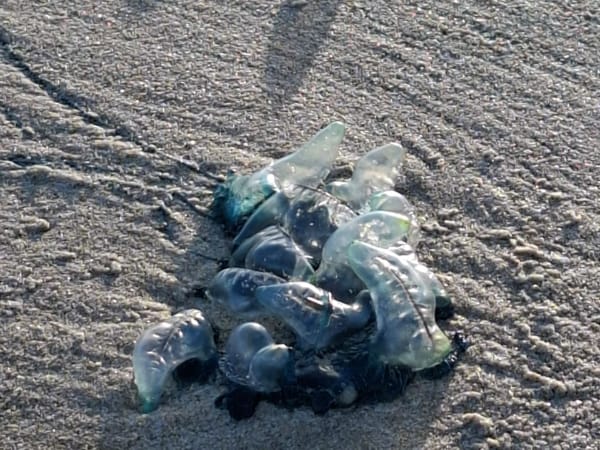
Beachgoers in the Eastern Cape have been warned to exercise caution or avoid swimming at certain beaches due to a surge of bluebottles (jellyfish-like creature recognized by its blue, gas-filled sac that floats on the water’s surface) along the coast. The small, jellyfish-like stinging creatures have washed up in large numbers at popular beaches, including Bluewater Bay in Algoa Bay, Kings Beach, Humewood, Hobie Beach in Gqeberha and Port Alfred’s West Beach.
The situation is being closely monitored by lifeguards and municipal officials who have closed sections of some beaches to beachgoers.
Chair of the Bluewater Bay Surf Lifesaving Club Eugene van Blerk said members are working with municipal lifeguards to keep a watchful eye on the situation, “We’ve seen quite a few incidents over the past few days of people being stung by bluebottles but luckily the lifeguards on duty are prepared and know how to deal with these incidents as they occur,” Van Blerk said.
According to Van Blerk, the surge of bluebottles is not unusual for this time of year, particularly when the easterly wind picks up. In the meantime, beachgoers are advised to heed warnings from officials on duty and take necessary precautions. A sting from a bluebottle is usually not life-threatening but can be painful.
Treatment involves pouring vinegar over the affected area. However, if a swimmer is stung in a sensitive area, it can lead to anaphylactic shock and require immediate medical attention.
In addition beachgoers are urged to exercise caution and follow instructions from lifeguards and municipal officials to ensure a safe and enjoyable experience at the beach.
photograph: supplied












Leave a Reply